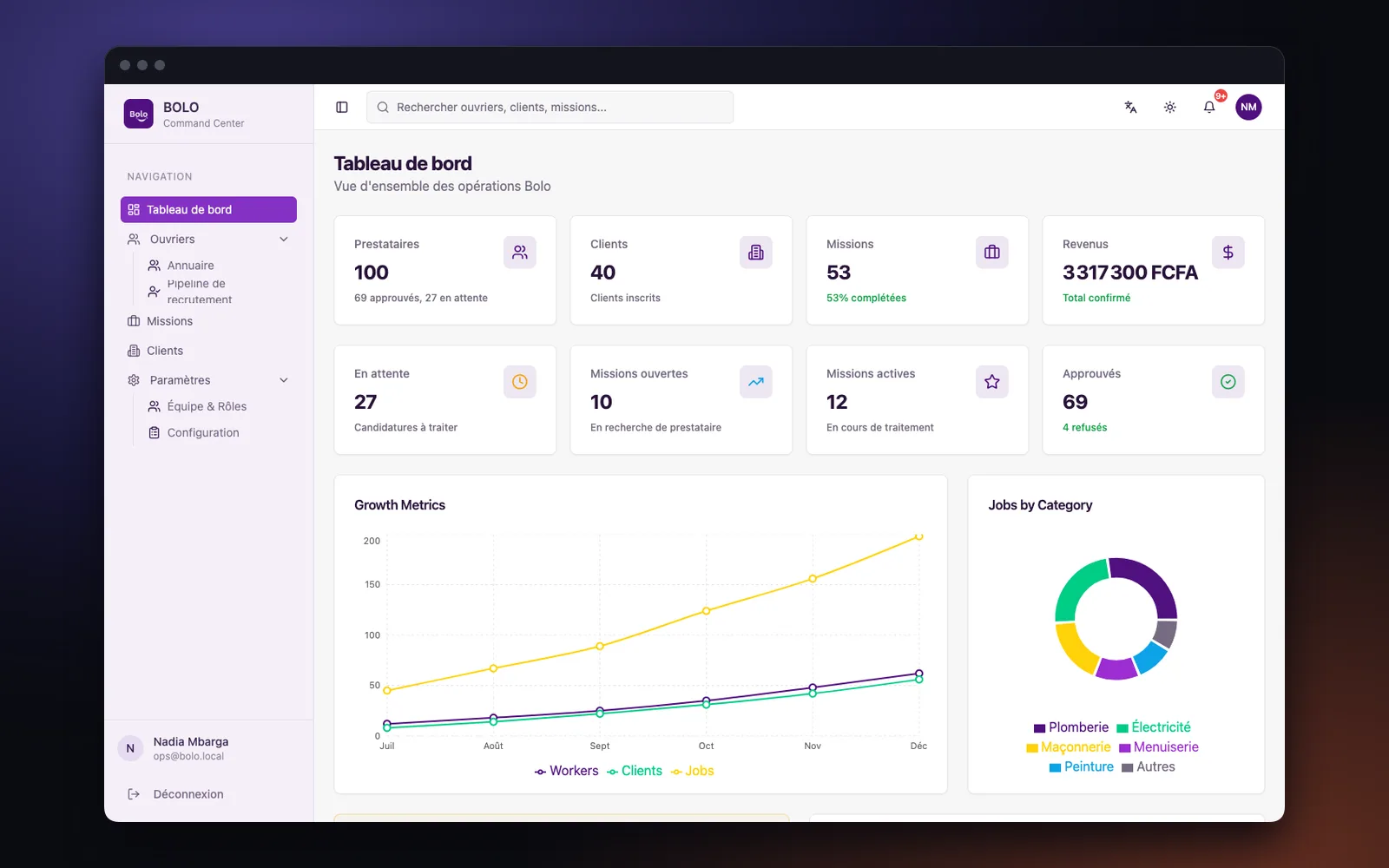
Backend and operations back-office of a home-services marketplace in Cameroon: missions, worker vetting, quotes and invoices, real-time notifications.
Django
DRF
PostgreSQL
Redis
Celery
Channels
React
Context
Bolo connects clients with vetted workers for home services in Cameroon, booked the way you book a ride-hailing trip.
The challenge
Trust is the product. Workers must be vetted before they get jobs, every mission needs a clear quote, and the operations team has to follow workers and missions as they move.
My role
Lead backend engineer: I wrote most of the API, and I built the operations command center.
What I built
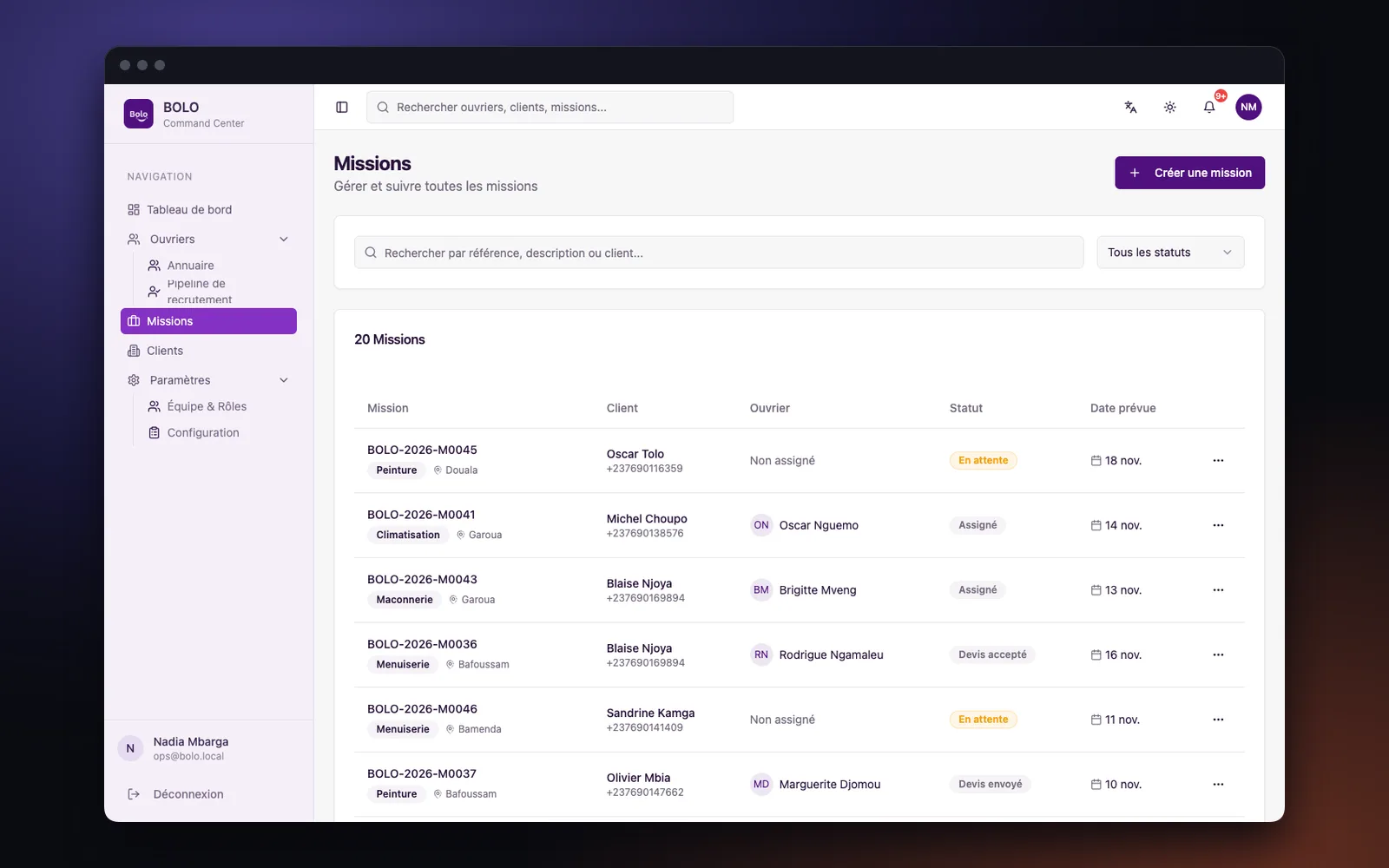
Mission workflow, direct or open to applications, from pending to paid through quote, acceptance and work in progress. Leads have their own pipeline.
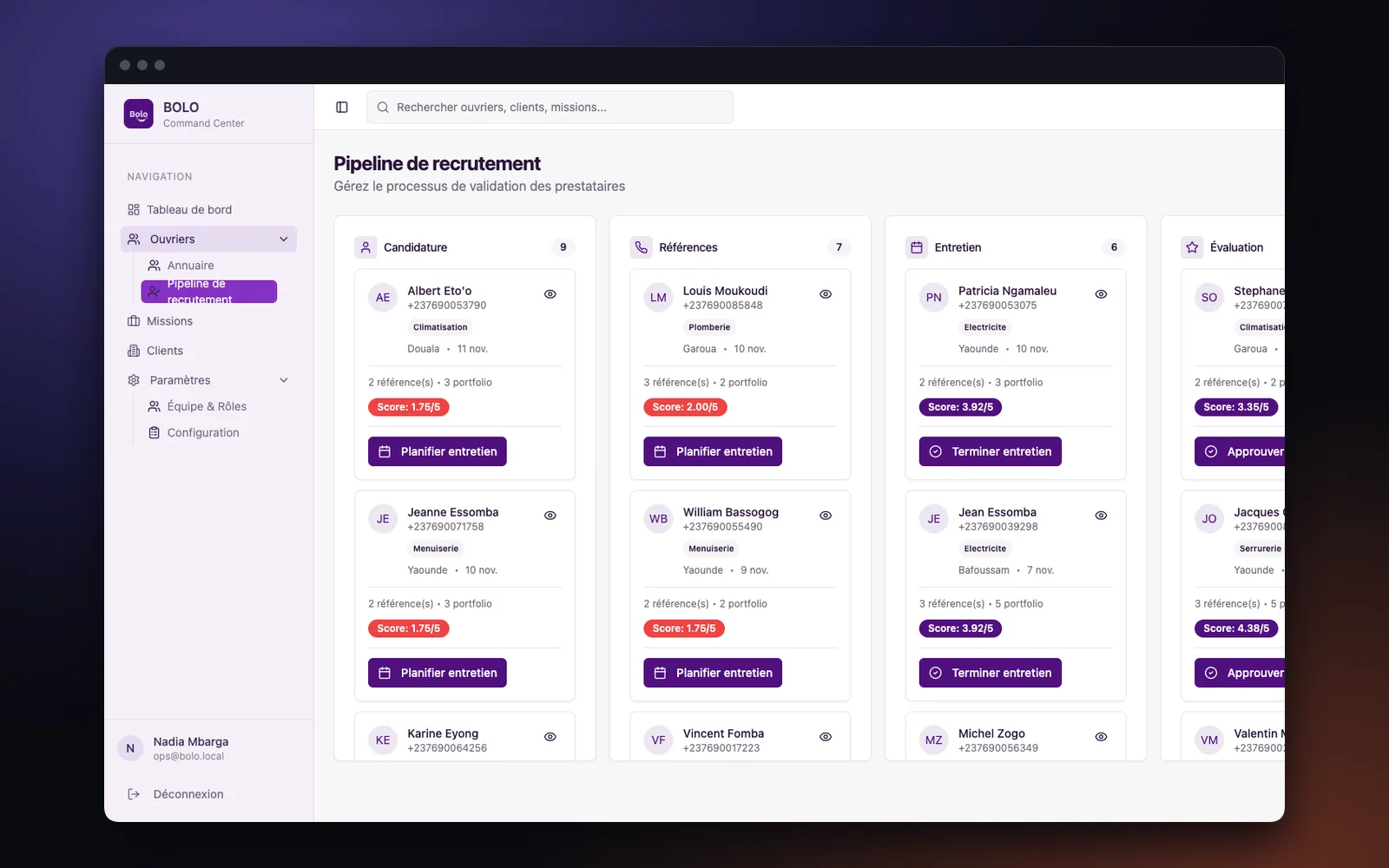
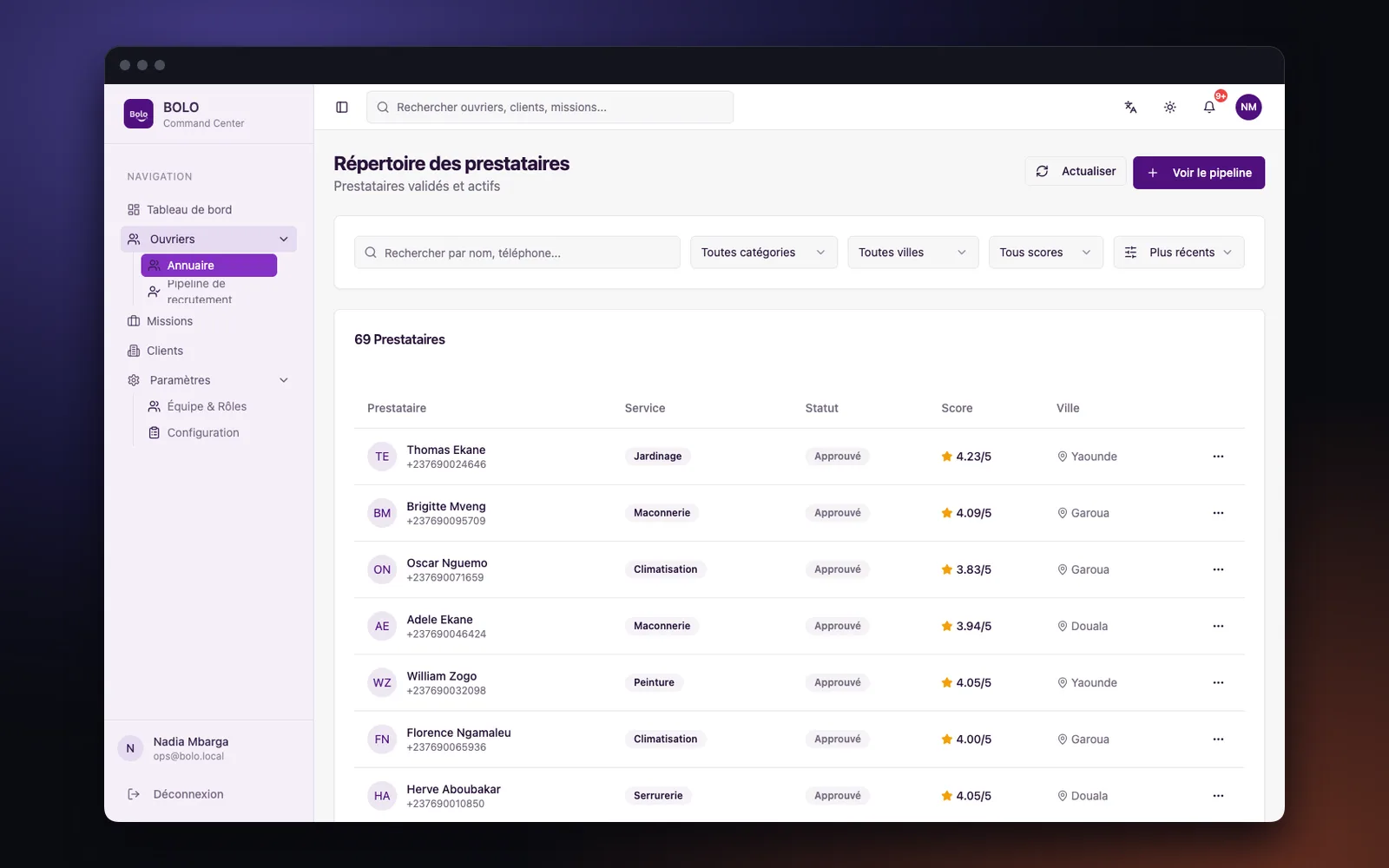
Worker vetting: an automatic profile score from 0 to 5 combined with an admin score, a minimum threshold and an interview before validation.
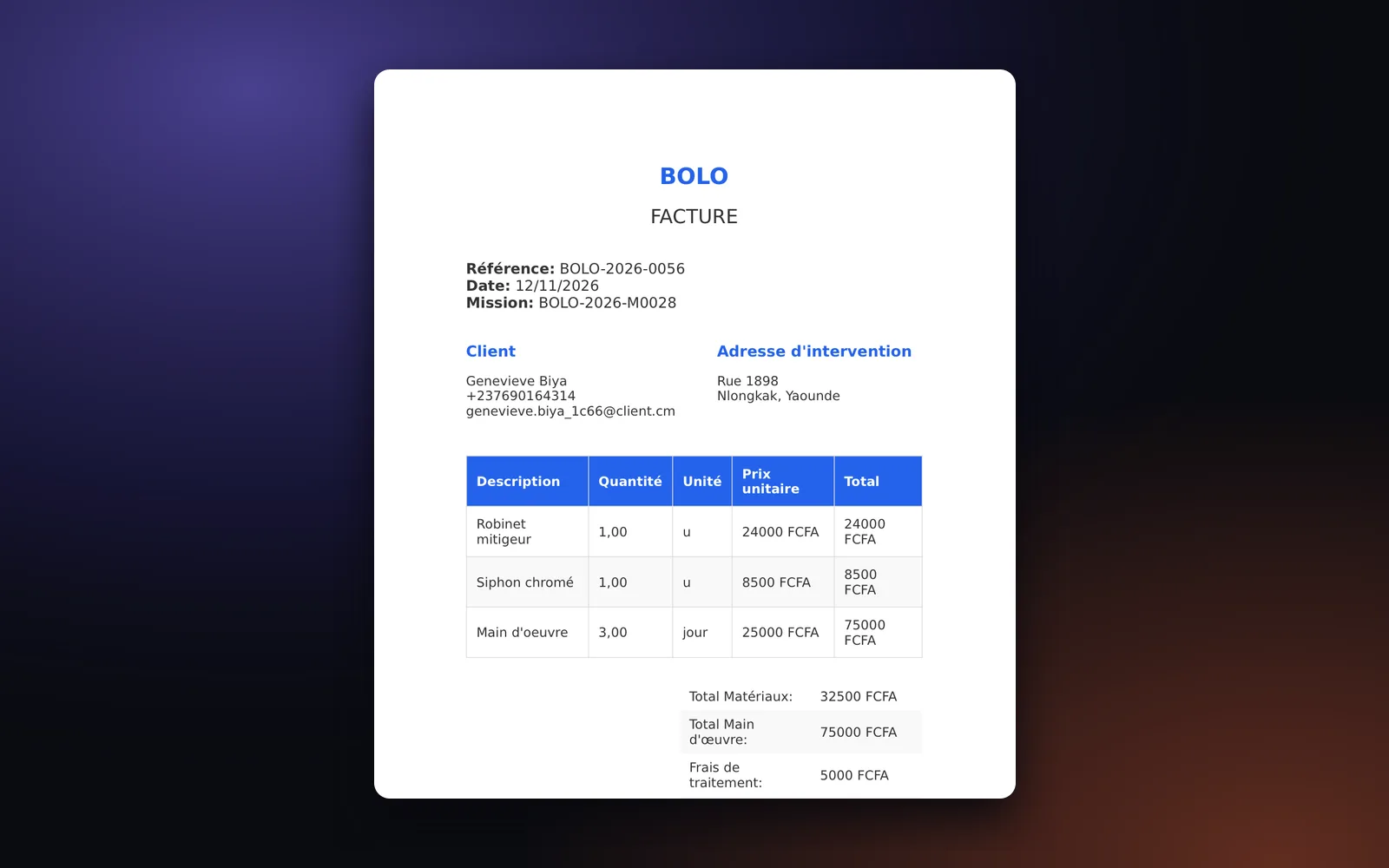
Quotes and invoices with material and labour lines, rendered to PDF.
Email one-time codes and JWT for the mobile apps; a separate admin login with token revocation.
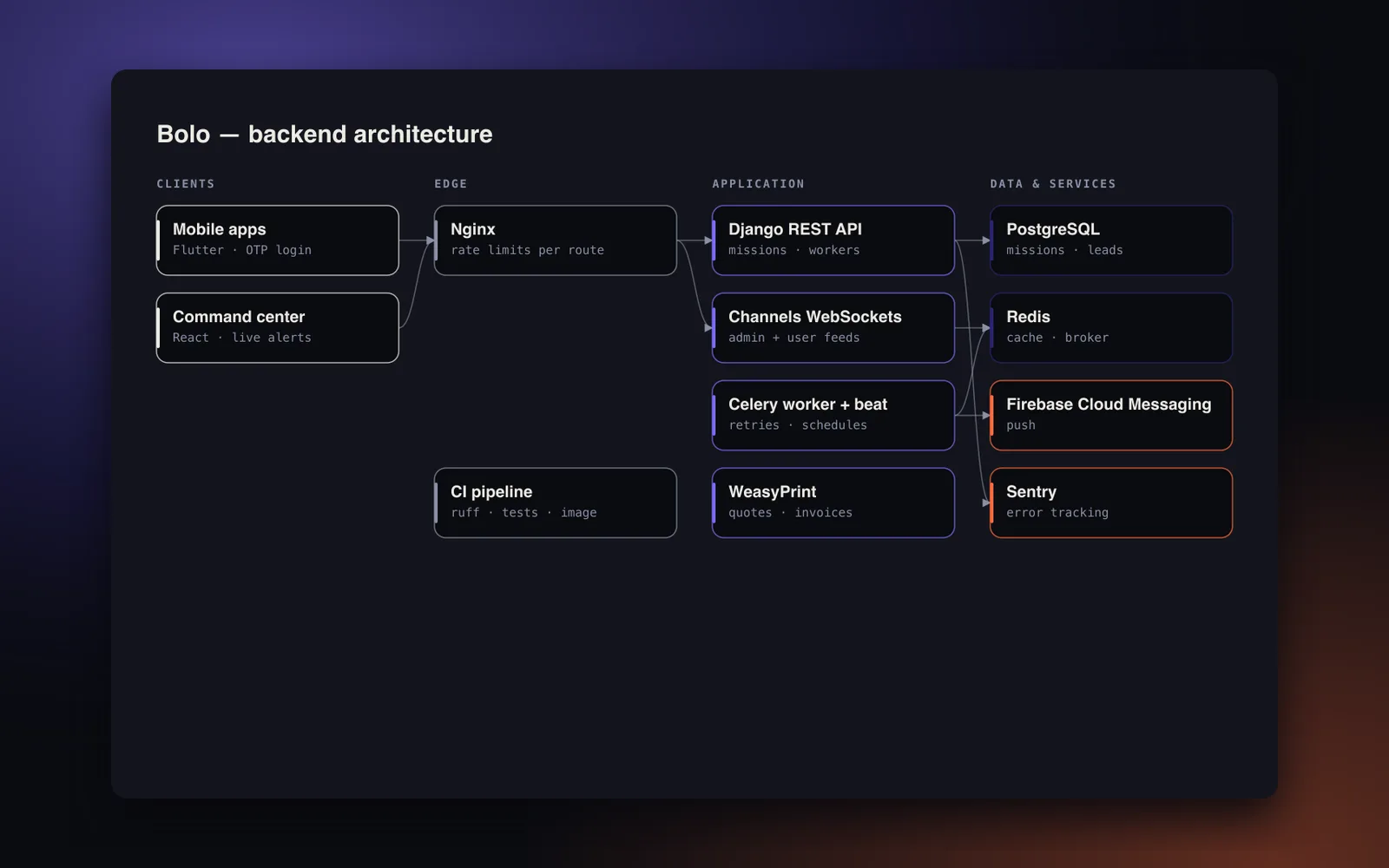
Real-time notifications over WebSockets and push (FCM), sent by Celery jobs with retries.
Command center in React: dashboard, clients, jobs, worker pipeline and directory, live alerts.
Results
Architecture designed for 10,000+ concurrent users, with per-route rate limits at the Nginx edge.
103 automated tests run in CI before every Docker image is built.
Screens
Missions with their status, client, assigned worker and dateWorker vetting pipeline: application, references, interview, evaluationDirectory of validated workers with service, score and cityInvoice generated as PDF, with material and labour linesBackend architecture: API, WebSockets, workers, data and push services
Need something similar?
I can scope it with you and tell you how I would build it.